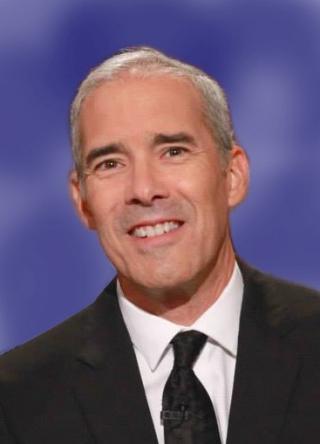
Anthony B. Falsetti, Ph.D., received his doctorate from the University of Tennessee- Knoxville and is a Board-Certified Forensic Anthropologist (#47) and the Manager and Deputy Laboratory Director of the Forensic Science Division at the Prince George’s County Police Department – Prince George’s County, MD. Dr. Falsetti is a Fellow of the American Academy of Forensic Sciences, a former editorial board member of the Journal of Forensic Sciences, and past Chair of the Physical Anthropology Section (now Anthropology) of the American Academy of Forensic Sciences. He is currently a member of the Academy Science Board (ASB), Disaster Victim Identification Group. Dr. Falsetti was the forensic anthropologist for the National Missing and Unidentified Persons Program (https://namus.nij.ojp.gov/), providing expert skeletal analysis for medical examiners and law enforcement agencies nationwide.
Dr. Falsetti has been deployed to many mass fatality situations, including military mishaps, commercial airline mass disasters (American Eagle, TWA 800), domestic terrorism (Oklahoma City Bombing), foreign terrorism (World Trade Center), and natural disasters (GA Floods, Thai Tsunami, and Haitian Earthquake). In Bosnia & Herzegovina, Anthony managed mortuaries and field teams for the International Commission on Missing Persons (ICMP), whose mission was to excavate, recover, and identify victims from the Bosnian Conflict 1992 – 1996. Recently (Spring 2019), he was part of a team of forensic anthropologists sent to San Juan, Puerto Rico, at the behest of the National Association of Attorneys General, ASCLD-Lab, Bureau of Forensic Sciences, and the Puerto Rico Department of Public Safety, to assist the local medical examiner’s office in recovering from the impact of Hurricane Maria.
Areas of Interest
- Forensic Science
- Science and the Courts
- Forensic Science & Humanitarian Applications
Degrees
-
Degree TypePh. D.
My research philosophy in forensic anthropology is grounded in the belief that human skeletal remains are complex biological and cultural archives. To responsibly decode these archives, a researcher must balance rigorous scientific objectivity with deep ethical responsibility. My work is driven by three core pillars: robust data collection, immersive practical experience, and the deliberate inclusion of diverse analytical frameworks.
-
ProfessionalAmerican Academy of Forensic Sciences Academy Sciences Board, American Society of Crime Lab Director